Eyespots, hisses and disguises
Caterpillars are food for many other animals, and adults have predators too. Here’s how they fight back without biting.
Caterpillars turn huge amounts of plant matter into animal matter, and are food for many other animals. Britannica: Lepidoptera
Eyespots
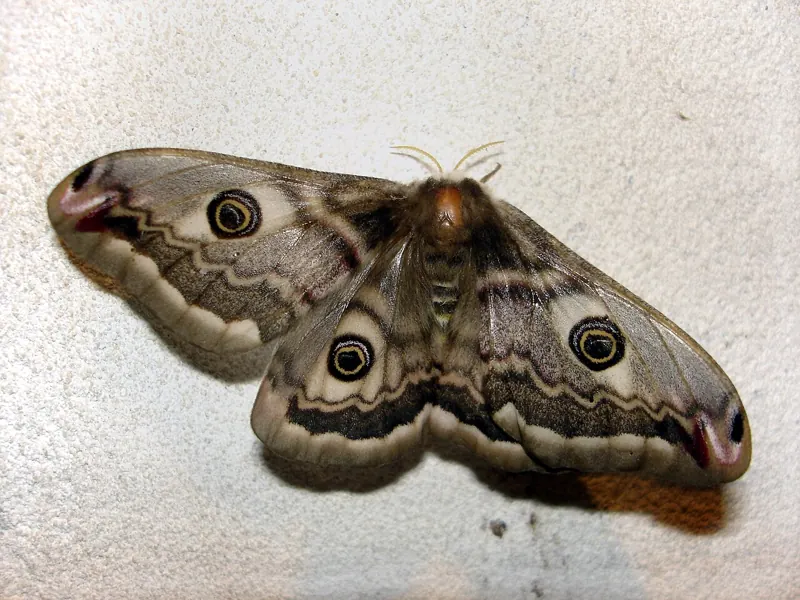
Bright eyespots or tails on the hindwings draw a predator’s attack away from the body. Losing a bit of wing does no real harm. Britannica: Lepidoptera (natural history, behaviour and ecology) The Peacock was voted Britain’s Favourite Butterfly. Its eyespots evolved to startle or confuse predators. Butterfly Conservation: Peacock
The hissing Peacock
When disturbed, a Peacock butterfly flicks its wings open to show four big eyespots and makes a hissing sound by rubbing its wing veins together. Vallin et al. 2005, Proceedings of the Royal Society B (peer-reviewed) In an experiment with blue tits, only 1 of 34 Peacocks with eyespots was killed, compared with 13 of 20 whose eyespots were painted over. Vallin et al. 2005, Proceedings of the Royal Society B (peer-reviewed)
Folded up, a Peacock’s very dark undersides look like dead leaves. Its caterpillars eat Common Nettle. Butterfly Conservation: Peacock
Flash and surprise
Some butterflies and moths hide bright colours under dull wings and flash them when disturbed. The surprise gives them time to escape. Britannica: Lepidoptera (natural history, behaviour and ecology) Garden Tiger caterpillars are hairy ‘woolly bears’. If disturbed, the adult flashes its orange hindwings and can produce a yellow fluid from behind its head. Butterfly Conservation: Garden Tiger
Poison and warning colours
Monarch caterpillars store toxins from the plants they eat. Burnet moths carry hydrogen cyanide in their blood. Britannica: Lepidoptera (natural history, behaviour and ecology) Bold warning colours are easy for predators to remember: after trying one or two, they leave others with the same pattern alone. Britannica: Lepidoptera (natural history, behaviour and ecology)
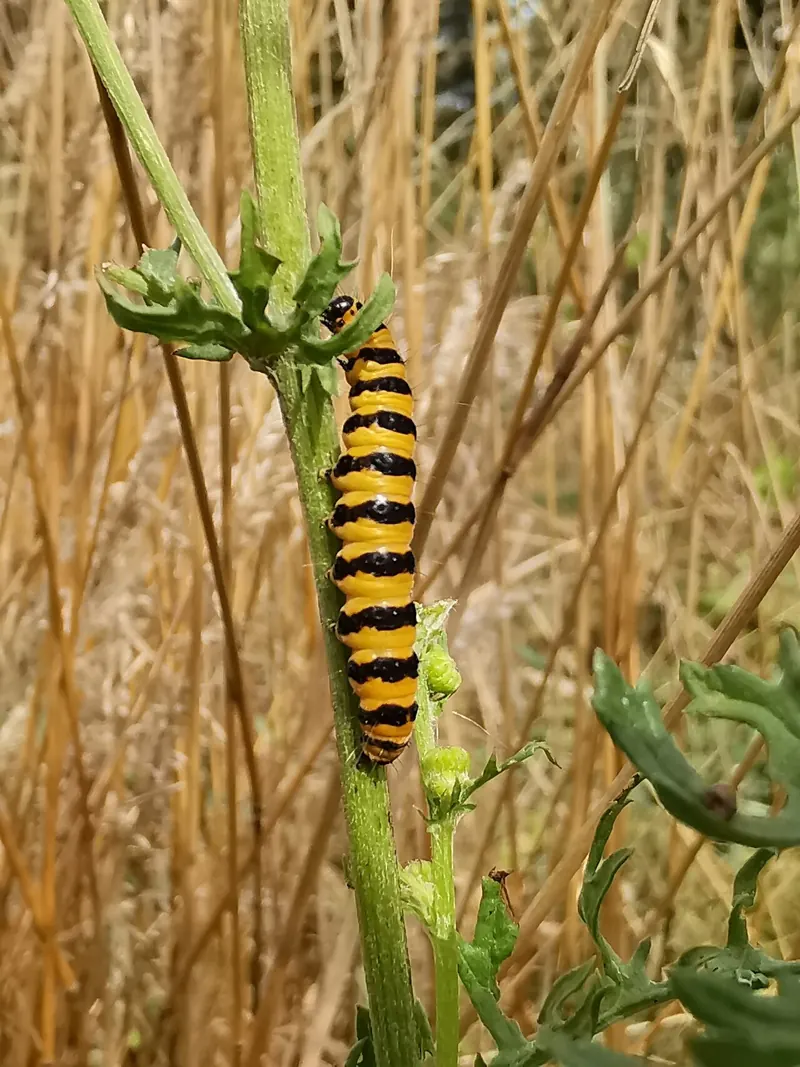
Milkweed sap contains chemicals poisonous to most animals. Monarchs resist it, and it protects their caterpillars from predators. US National Park Service: Milkweed and monarchs The Cinnabar moth is named after a red mineral. Its yellow-and-black caterpillars feed on ragwort. Natural History Museum, London: UK moths, nine of the most colourful and distinctive
Disguise
Clearwing moths look remarkably like stinging wasps, right down to the wings, body and legs. Britannica: Lepidoptera (natural history, behaviour and ecology) Many inchworm caterpillars look just like twigs, and the buff-tip moth resembles a small twig. Britannica: Lepidoptera (natural history, behaviour and ecology)
The Comma’s ragged wing edges hide it among dead leaves while it hibernates, and its caterpillars look like bird droppings. Butterfly Conservation: Comma A roosting Brimstone’s angular, veined wings look like leaves. Butterfly Conservation: Brimstone
When threatened, its caterpillar swells the eye-marks near its head to look like a snake. Natural History Museum, London: UK moths, nine of the most colourful and distinctive The atlas moth of South-east Asia is one of the largest moths: females can have a 25 cm wingspan. Its wingtips look like a snake’s head. Britannica: Atlas moth
Sound
Tiger moths that taste bad make high-pitched clicks that people can’t hear but bats can, which may warn bats off. Britannica: Lepidoptera (natural history, behaviour and ecology) The Death’s-head Hawk-moth squeaks when alarmed by pushing air through its tongue, and sometimes enters beehives looking for honey. Butterfly Conservation: Death’s-head Hawk-moth
Next: long journeys →