28 butterflies and moths worth meeting
Out of roughly 180,000 kinds, here are 28: garden favourites, rarities, record-breakers and some of the most famous moths in science.
The UK has 60 species of butterfly: 58 that live here and two regular migrants, the Painted Lady and Clouded Yellow. Butterfly Conservation: Butterflies · checked 30 Oct 2026 Britain has over 2,500 species of moth. Since 1900, 51 have died out here. Butterfly Conservation: Moths · checked 30 Oct 2026
80% of UK butterfly species have decreased in numbers, range, or both since 1976 (State of the UK’s Butterflies 2022). Butterfly Conservation: Butterflies · checked 30 Oct 2026 Larger moths caught in light traps across Britain fell by 33% in 50 years (1968–2017). Butterfly Conservation: The State of Britain’s Moths · checked 30 Oct 2026 Four times as many larger moth species decreased in numbers as increased. Butterfly Conservation: The State of Britain’s Moths · checked 30 Oct 2026
Five UK butterflies died out in the last 150 years: the Mazarine Blue, Large Tortoiseshell, Black-veined White, Large Copper and Large Blue. Butterfly Conservation: Butterflies · checked 30 Oct 2026
- The Large Blue was reintroduced in 1992, and the Large Tortoiseshell was declared resident once again in 2026. Butterfly Conservation: Butterflies · checked 30 Oct 2026
- The Large Tortoiseshell is still officially ‘Regionally Extinct’ on the GB Red List until the next update. Butterfly Conservation: Large Tortoiseshell · checked 30 Oct 2026
Both statements come from Butterfly Conservation. The butterfly has been declared resident again, but the official GB Red List has not yet been updated. Every disagreement we found →
Counts and trends can change; those facts carry the date we checked them (30 Oct 2026).
Garden and countryside butterflies
Ones you might see in a British garden, park or lane.
Rare, lost and returning
Butterflies Britain has lost, nearly lost or won back.
Travellers, giants and tiddlers
A long-distance champion, a giant and one of the smallest.
British moths worth meeting
Day-flyers, hawk-moths, tigers and the most famous moth in science.
 No. 18Hummingbird Hawk-mothMacroglossum stellatarum
 No. 19Elephant Hawk-mothDeilephila elpenor
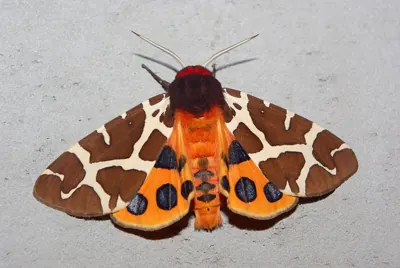 No. 20Garden TigerArctia caja
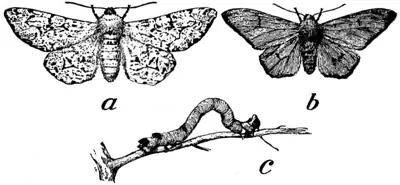 No. 21Peppered MothBiston betularia
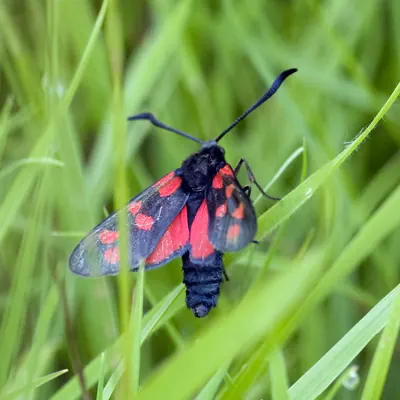 No. 22Six-spot BurnetZygaena filipendulae
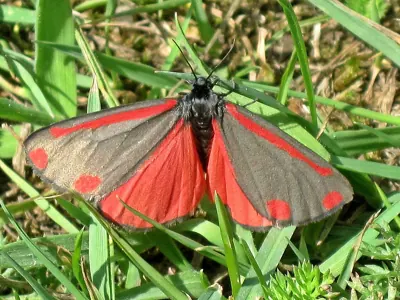 No. 23CinnabarTyria jacobaeae
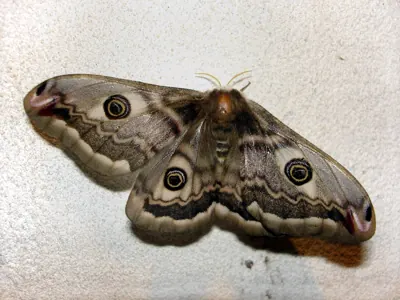 No. 24Emperor MothSaturnia pavonia
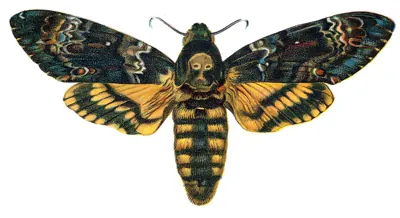 No. 25Death’s-head Hawk-mothAcherontia atropos
Moths from further away
Huge wings, no mouths, and silk.
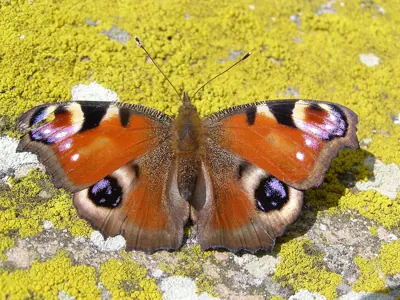
No. 01 · Aglais io
Peacock
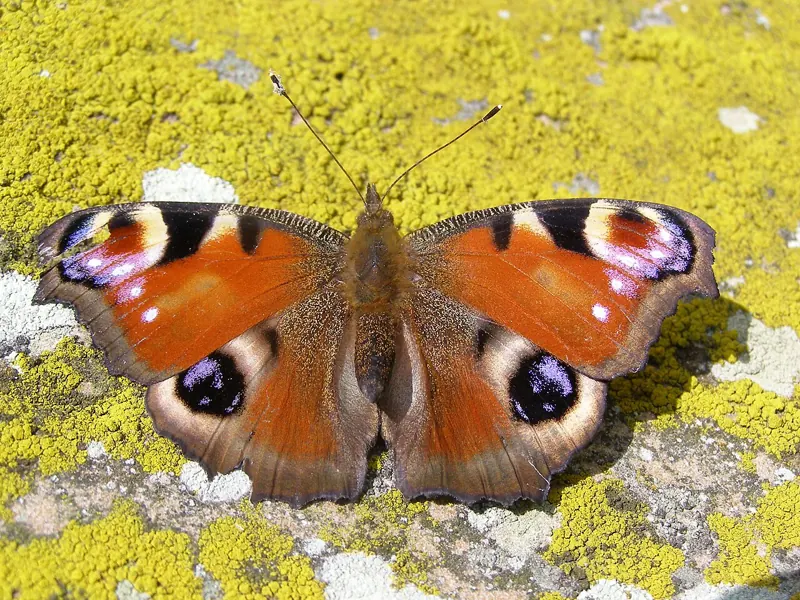
- The Peacock was voted Britain’s Favourite Butterfly. Its eyespots evolved to startle or confuse predators. Butterfly Conservation: Peacock
- Folded up, a Peacock’s very dark undersides look like dead leaves. Its caterpillars eat Common Nettle. Butterfly Conservation: Peacock
- When disturbed, a Peacock butterfly flicks its wings open to show four big eyespots and makes a hissing sound by rubbing its wing veins together. Vallin et al. 2005, Proceedings of the Royal Society B (peer-reviewed)
- In an experiment with blue tits, only 1 of 34 Peacocks with eyespots was killed, compared with 13 of 20 whose eyespots were painted over. Vallin et al. 2005, Proceedings of the Royal Society B (peer-reviewed)
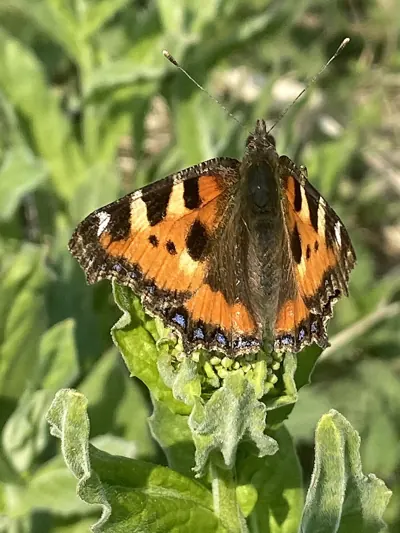
No. 02 · Aglais urticae
Small Tortoiseshell
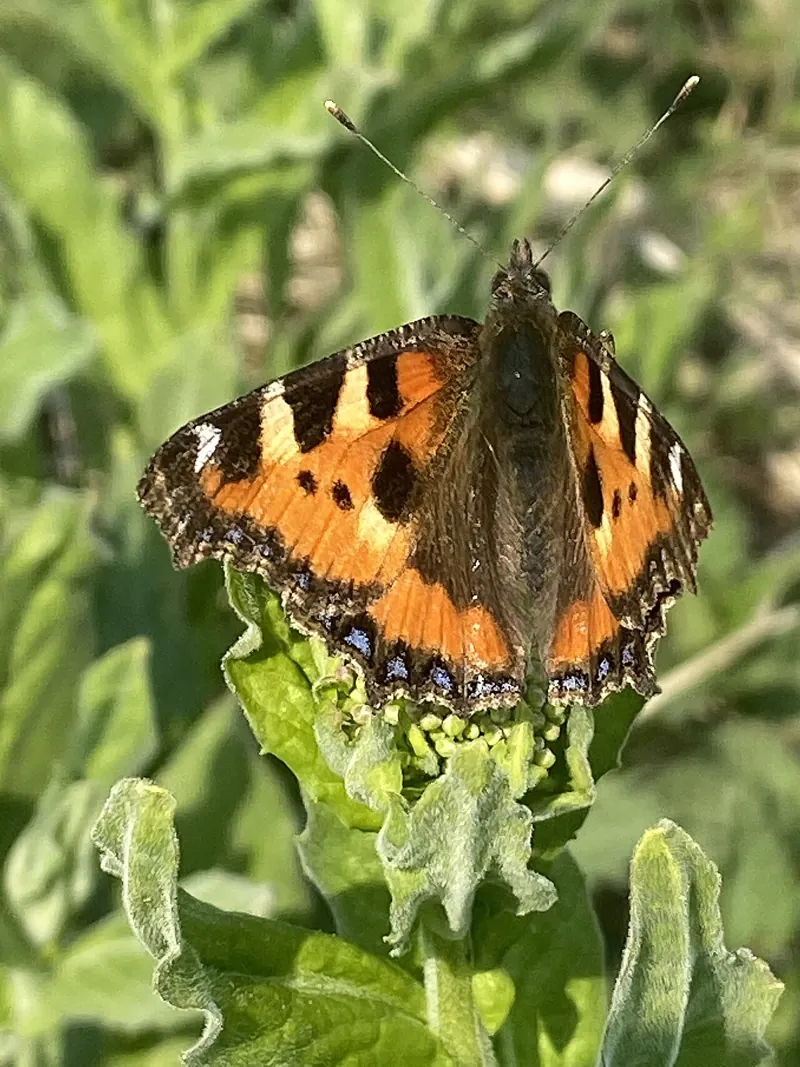
- The Small Tortoiseshell is one of the first butterflies seen in spring. Butterfly Conservation: Small Tortoiseshell
- Small Tortoiseshell numbers in UK monitoring fell by 79% between 1976 and 2019. Butterfly Conservation: Small Tortoiseshell · checked 30 Oct 2026
- On the island you may find Small Tortoiseshells hibernating inside houses, and Clouded Yellows sometimes fly in off the Irish Sea. Manx Wildlife Trust: identification guide to Manx butterflies
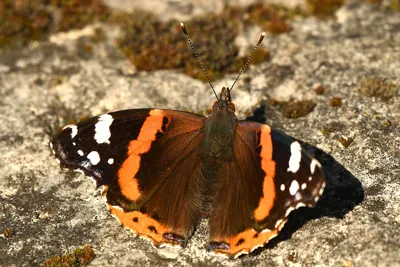
No. 03 · Vanessa atalanta
Red Admiral
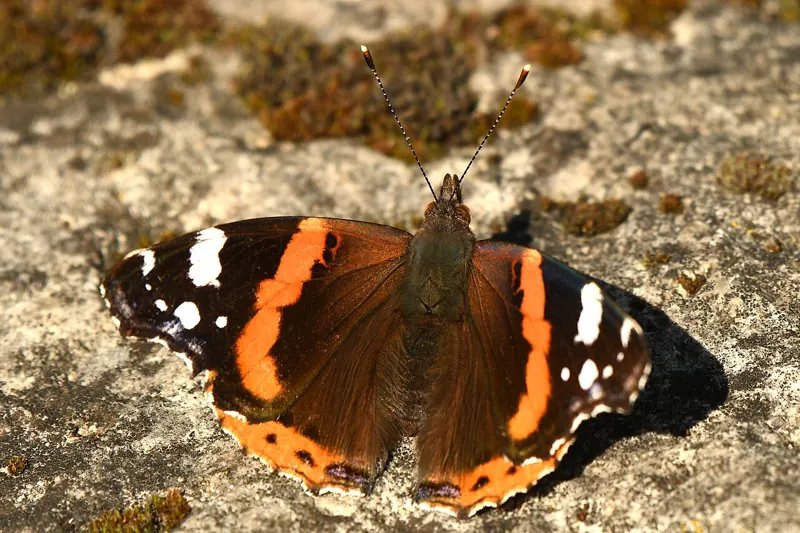
- Red Admirals can turn up anywhere, from town centres to the tops of mountains. They migrate north each spring from North Africa and continental Europe. Butterfly Conservation: Red Admiral
- Red Admirals now regularly spend the winter in the UK, thanks to milder conditions. Manx Wildlife Trust: Butterfly count · checked 30 Oct 2026
- Not all moths fly at night: the Cinnabar and Scarlet Tiger fly by day, and some butterflies, such as the Red Admiral, fly at night. Butterfly Conservation: Moth myths
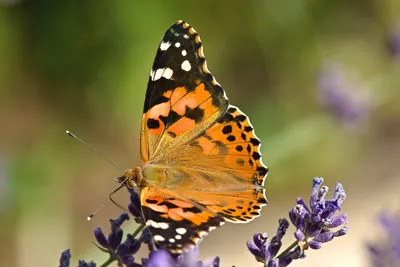
No. 04 · Vanessa cardui
Painted Lady
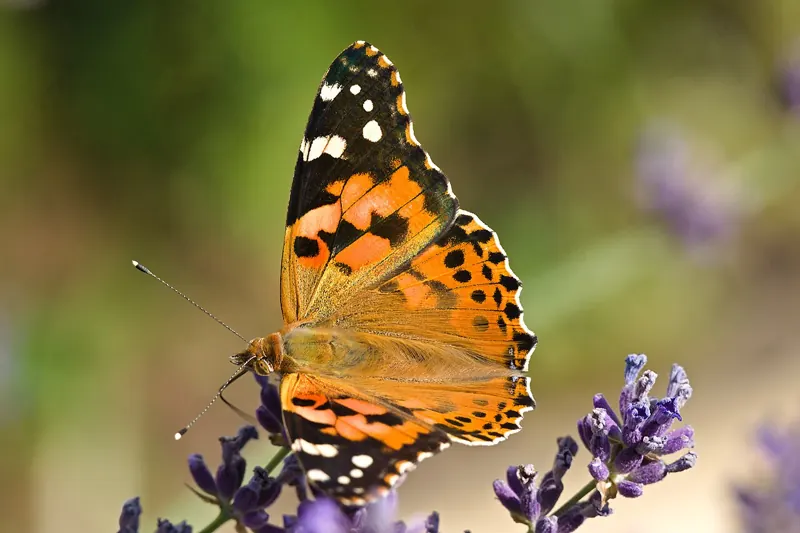
- Each year the Painted Lady spreads north from the desert fringes of North Africa, the Middle East and central Asia, reaching Britain and Ireland. Butterfly Conservation: Painted Lady
- Painted Lady caterpillars prefer thistles in Britain and Ireland. Butterfly Conservation: Painted Lady
- Painted Ladies make a 9,000-mile round trip between tropical Africa and the Arctic Circle, in steps by up to six generations. University of York: Painted Lady migration secrets unveiled
- A Painted Lady weighs less than a gram and has a brain the size of a pin head. University of York: Painted Lady migration secrets unveiled
No. 05 · Gonepteryx rhamni
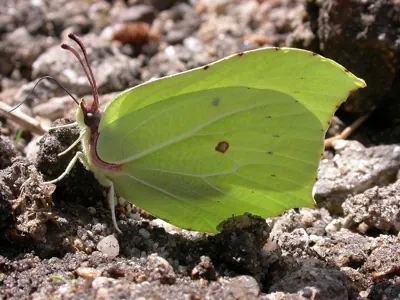
Brimstone
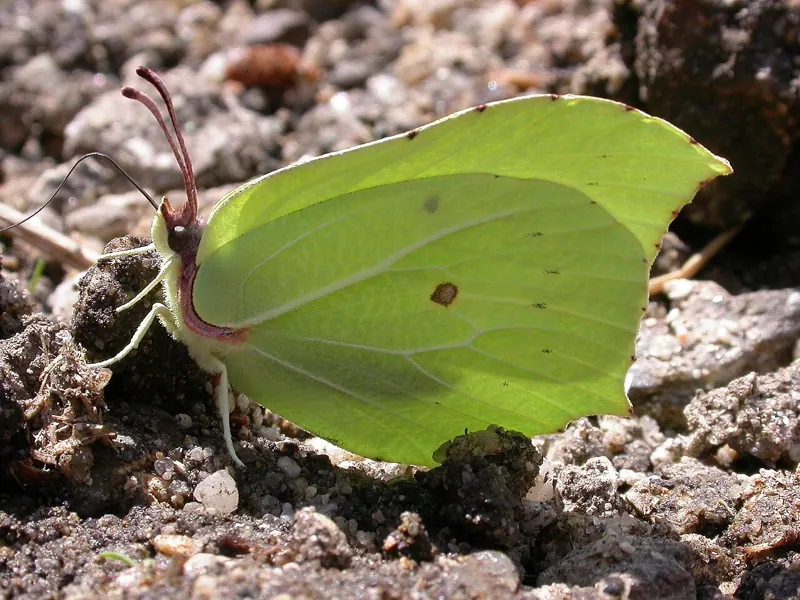
- A roosting Brimstone’s angular, veined wings look like leaves. Butterfly Conservation: Brimstone
- Female Brimstones are very pale green, almost white. Caterpillars eat Buckthorn and Alder Buckthorn. Butterfly Conservation: Brimstone
- One theory is that the word ‘butterfly’ comes from the yellow colour of male Brimstones. Butterfly Conservation: Brimstone
No. 06 · Anthocharis cardamines
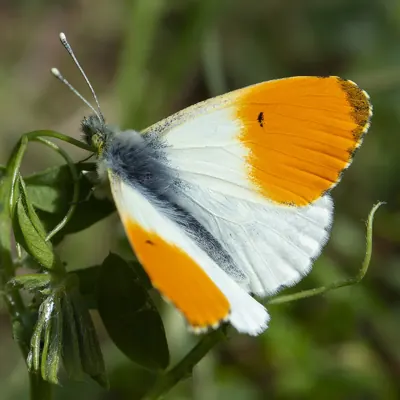
Orange-tip
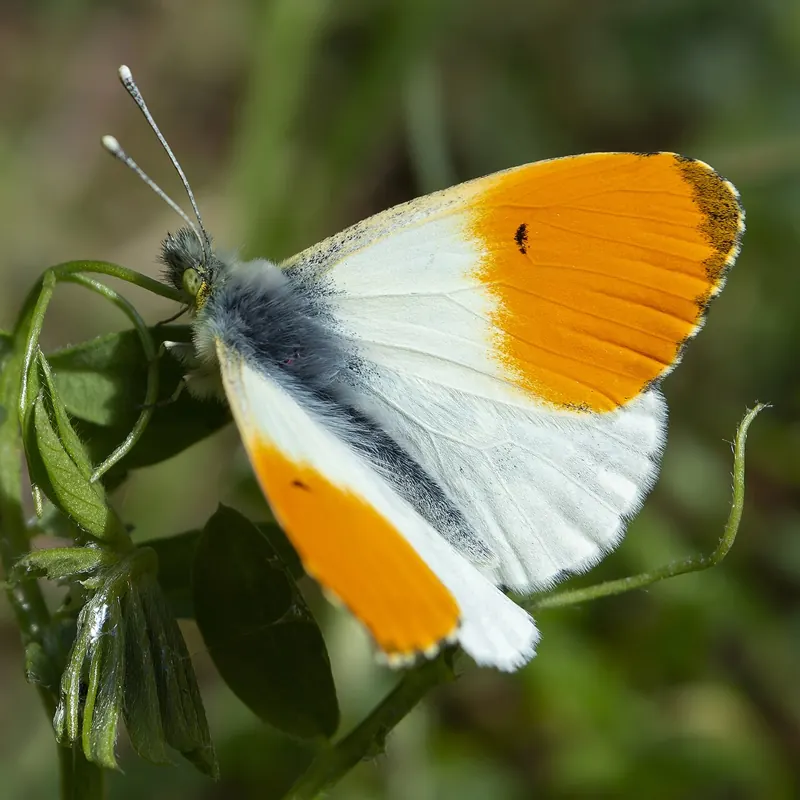
- Male Orange-tips are white with bright orange wingtips. Females have black wingtips instead. Butterfly Conservation: Orange-tip
- The Orange-tip was voted Britain’s second-favourite butterfly. Its caterpillars like Cuckooflower and Garlic Mustard. Butterfly Conservation: Orange-tip
No. 07 · Celastrina argiolus
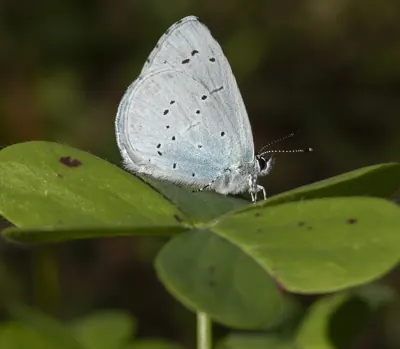
Holly Blue
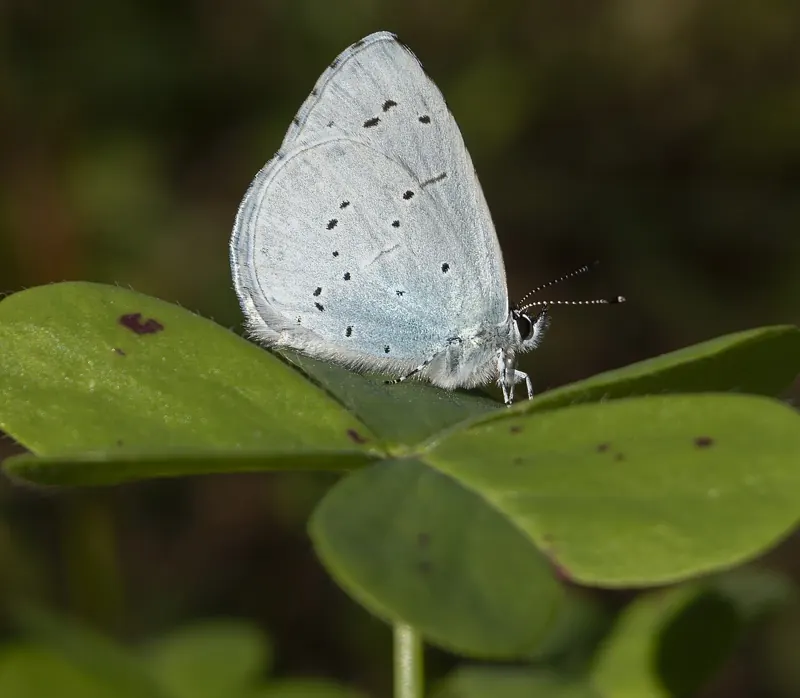
- The Holly Blue appears in early spring before other blues and flies high round bushes and trees. It uses Holly in spring and Ivy in late summer. Butterfly Conservation: Holly Blue
- Holly Blue numbers rise and fall in a cycle over a few years, thought to be caused by a wasp whose only host is the Holly Blue. Manx Wildlife Trust: Butterfly count
No. 08 · Polygonia c-album
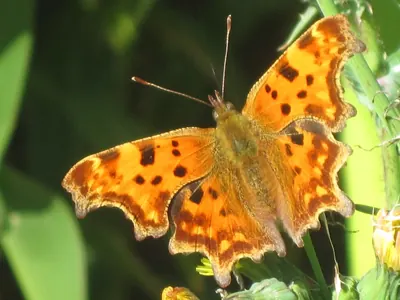
Comma
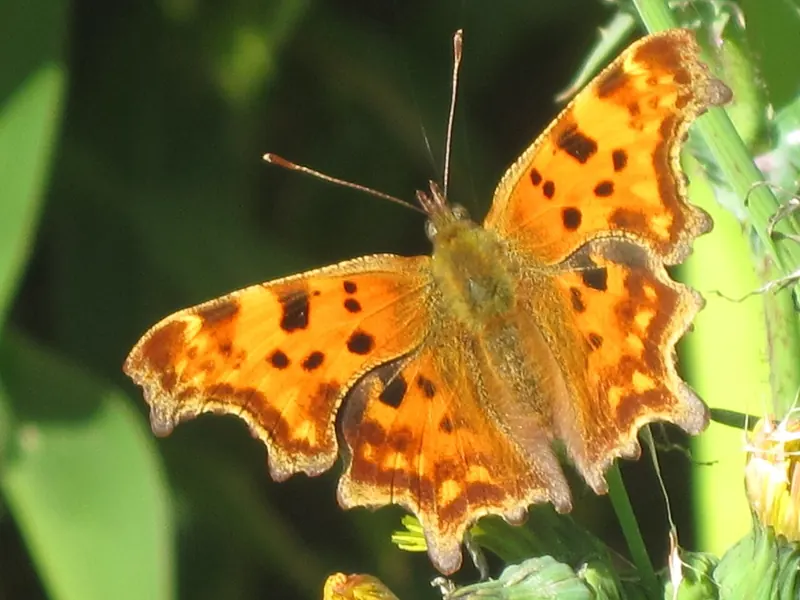
- The Comma’s ragged wing edges hide it among dead leaves while it hibernates, and its caterpillars look like bird droppings. Butterfly Conservation: Comma
- The Comma declined badly in the twentieth century, then made a comeback. Butterfly Conservation: Comma
No. 09 · Pararge aegeria
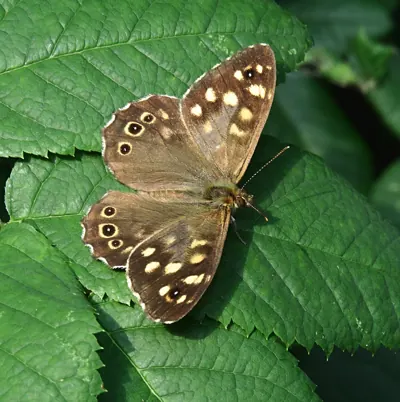
Speckled Wood
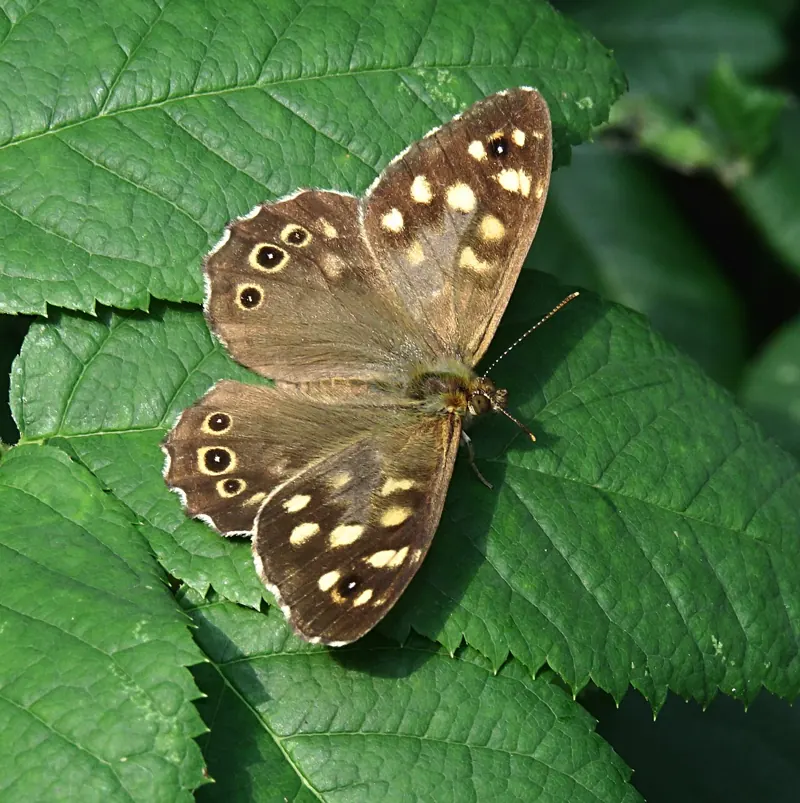
- Male Speckled Woods perch in a small pool of sunlight and fly up to meet any intruder. They feed mainly on honeydew in the treetops. Butterfly Conservation: Speckled Wood
No. 10 · Papilio machaon
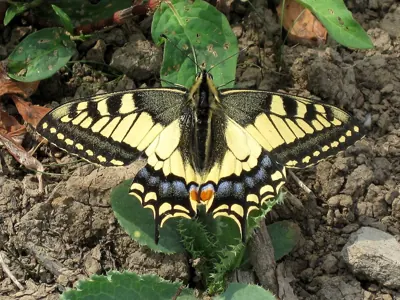
Swallowtail
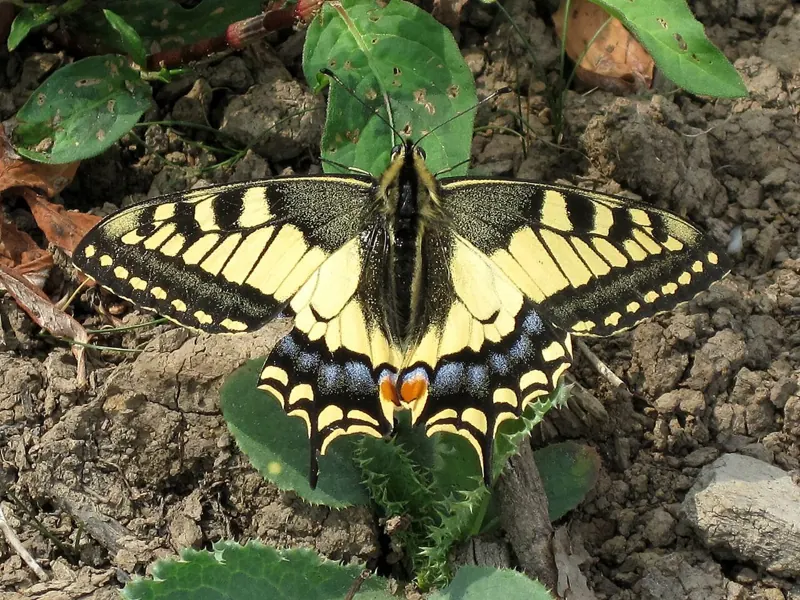
- Britain’s own Swallowtail lives only in the Norfolk Broads, and its caterpillars eat only Milk-parsley. Butterfly Conservation: Swallowtail · checked 30 Oct 2026
- It is a large butterfly: females have a wingspan of 86–93 mm. Butterfly Conservation: Swallowtail
- Others, such as swallowtails and some whites and blues, are held head-up by a silk ‘girdle’ round the middle. Britannica: Lepidoptera (natural history, behaviour and ecology)
No. 11 · Phengaris arion
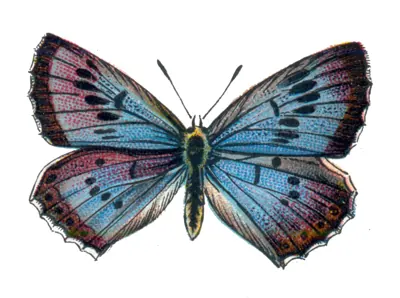
Large Blue
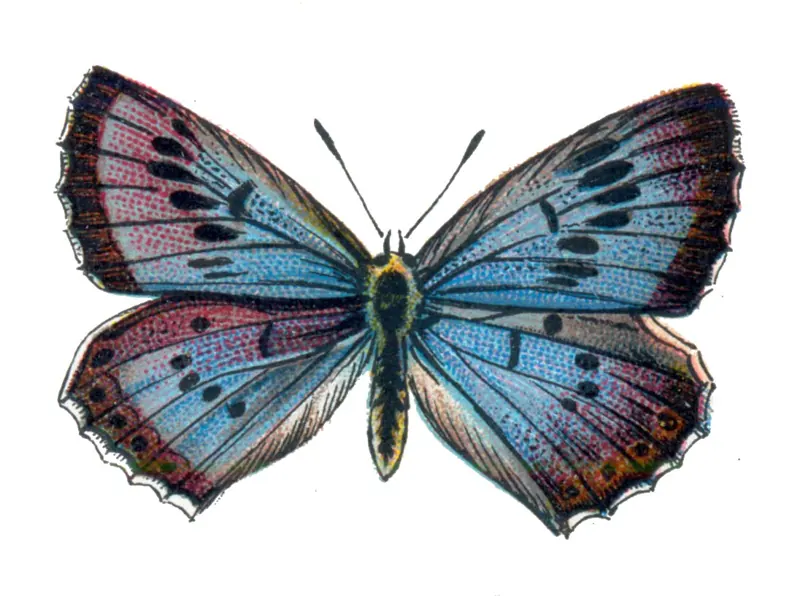
- Large Blue caterpillars spend most of the year inside red ants’ nests, eating ant grubs. Butterfly Conservation: Large Blue
- The Large Blue died out in Britain in 1979. It was brought back from continental Europe in a long and highly successful conservation project. Butterfly Conservation: Large Blue
No. 12 · Apatura iris
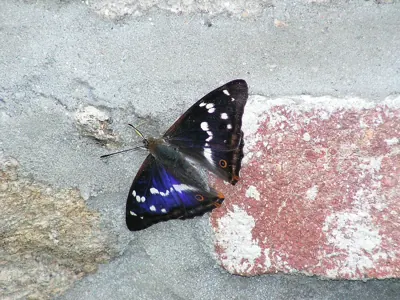
Purple Emperor
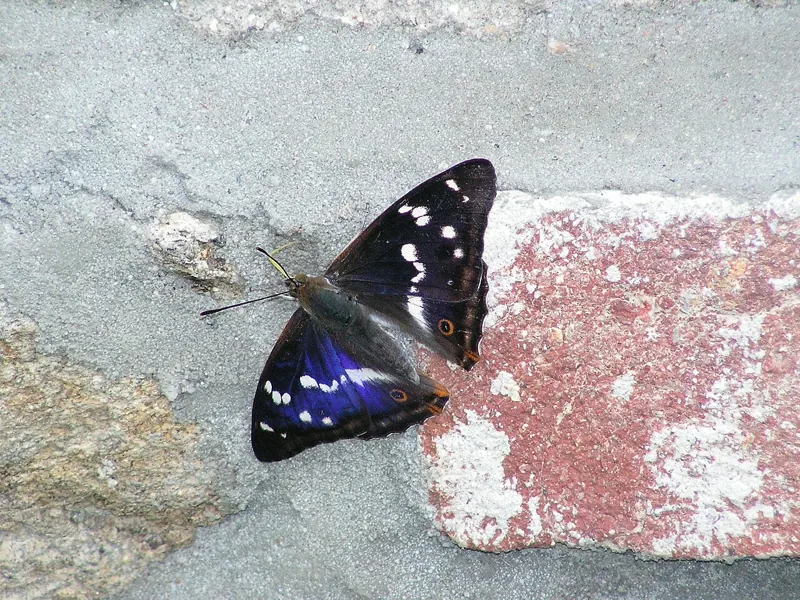
- Purple Emperors live high in the treetops. Males sometimes come down to the ground to sip salts from roads or animal dung. Butterfly Conservation: Purple Emperor
No. 13 · Nymphalis polychloros
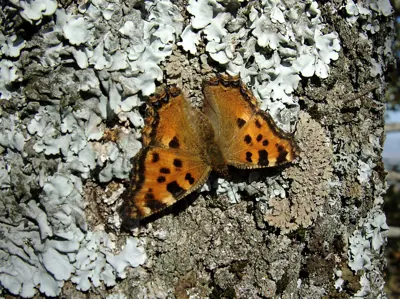
Large Tortoiseshell
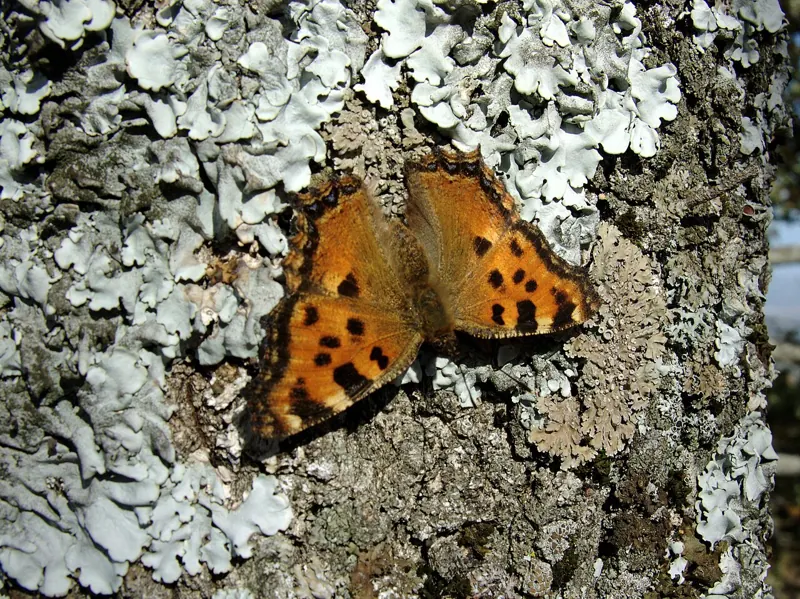
- In early 2026 Large Tortoiseshells were photographed in Kent, Hampshire, Sussex, Dorset, Cornwall and the Isle of Wight. More are probably crossing from the Netherlands, where numbers have grown. Butterfly Conservation news, 9 March 2026: ‘Extinct’ butterfly spotted across England · checked 30 Oct 2026
- Large Tortoiseshells lay their eggs mainly on elm trees, and their loss has been linked to Dutch elm disease. Butterfly Conservation news, 9 March 2026: ‘Extinct’ butterfly spotted across England
- The Large Tortoiseshell is still officially ‘Regionally Extinct’ on the GB Red List until the next update. Butterfly Conservation: Large Tortoiseshell · checked 30 Oct 2026
No. 14 · Lycaena dispar
Large Copper
We haven’t found a public domain or CC0 photo of this one that we can be sure is labelled correctly, so there’s no picture yet.
- The Large Copper was discovered at Dozen’s Bank near Spalding, Lincolnshire, in 1749 and was gone by 1851, when the fens were drained. Butterfly Conservation: Large Copper
No. 15 · Danaus plexippus
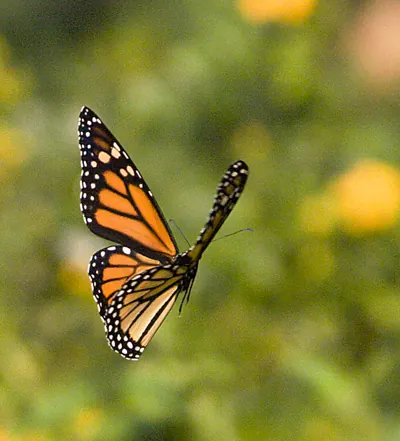
Monarch
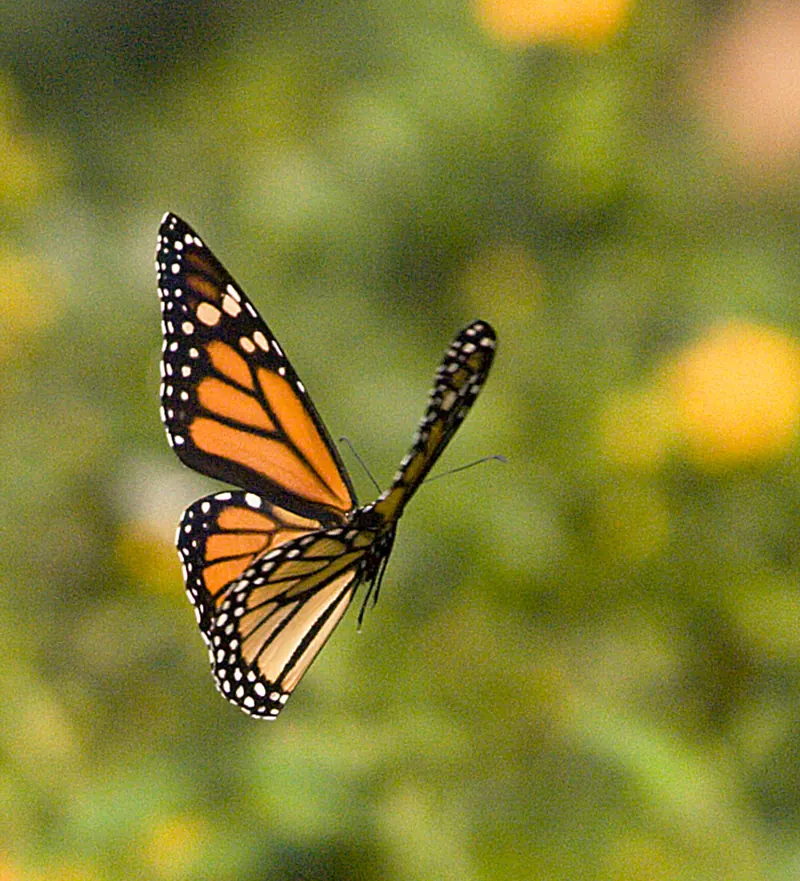
- North America’s monarch makes a two-way migration, like a bird: south in autumn and back north in spring. US Forest Service: Monarch butterfly migration and overwintering
- The Monarch is the largest butterfly seen in the British Isles, but it is a very rare visitor, first recorded here in 1876. Butterfly Conservation: Monarch
- Monarchs have never been recorded breeding in Britain, because their milkweed food plants are not native here. Butterfly Conservation: Monarch
- Monarchs lay eggs only on milkweed, and their caterpillars eat only milkweed leaves. US National Park Service: Milkweed and monarchs
No. 16 · Ornithoptera alexandrae
Queen Alexandra’s birdwing
We haven’t found a public domain or CC0 photo of this one that we can be sure is labelled correctly, so there’s no picture yet.
- Birdwing butterflies from New Guinea have wingspans of up to 12 inches (about 30 cm). Queen Alexandra’s birdwing has been threatened by collectors. American Museum of Natural History: Butterfly FAQ
No. 17 · Brephidium isophthalma
Eastern pygmy blue
We haven’t found a public domain or CC0 photo of this one that we can be sure is labelled correctly, so there’s no picture yet.
- One of the smallest butterflies, the eastern pygmy blue of the south-eastern United States, has a wingspan of about 5/8 of an inch (about 1.6 cm). American Museum of Natural History: Butterfly FAQ
No. 18 · Macroglossum stellatarum
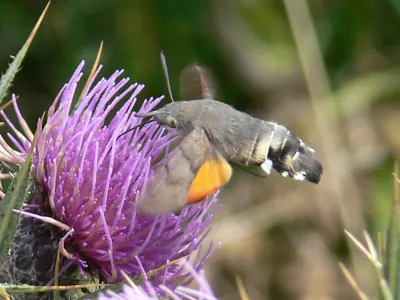
Hummingbird Hawk-moth
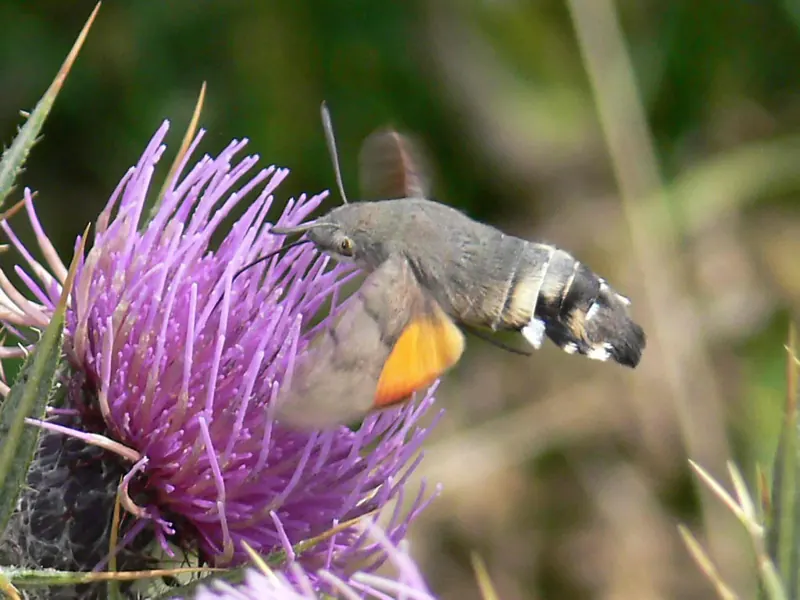
- The Hummingbird Hawk-moth flies by day and hovers in front of flowers to sip nectar like a hummingbird. It now breeds in the UK and is considered a resident. Natural History Museum, London: UK moths, nine of the most colourful and distinctive · checked 30 Oct 2026
- Hummingbird Hawk-moths are reported to Manx Wildlife Trust every year by people who think they have seen the little American bird. Manx Wildlife Trust: identification guide to Manx butterflies
No. 19 · Deilephila elpenor
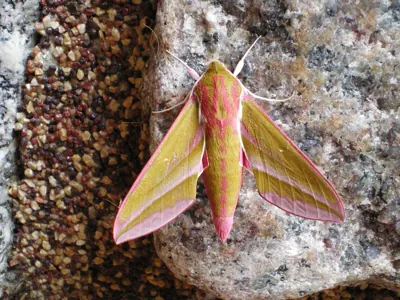
Elephant Hawk-moth
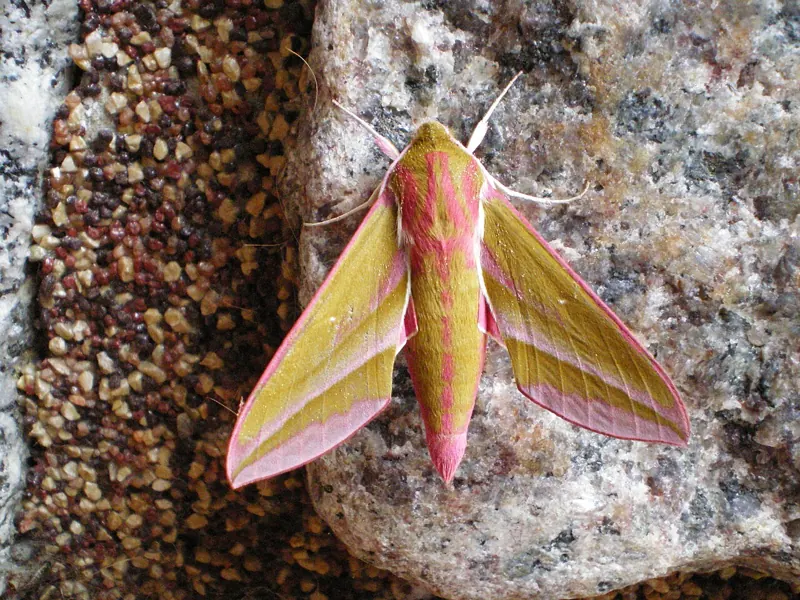
- The Elephant Hawk-moth is named after its caterpillar, which looks like an elephant’s trunk. Caterpillars grow to nearly 9 cm. Natural History Museum, London: UK moths, nine of the most colourful and distinctive
- When threatened, its caterpillar swells the eye-marks near its head to look like a snake. Natural History Museum, London: UK moths, nine of the most colourful and distinctive
- Elephant Hawk-moths are often found where Rosebay Willowherb grows. Butterfly Conservation: Elephant Hawk-moth
No. 20 · Arctia caja
Garden Tiger
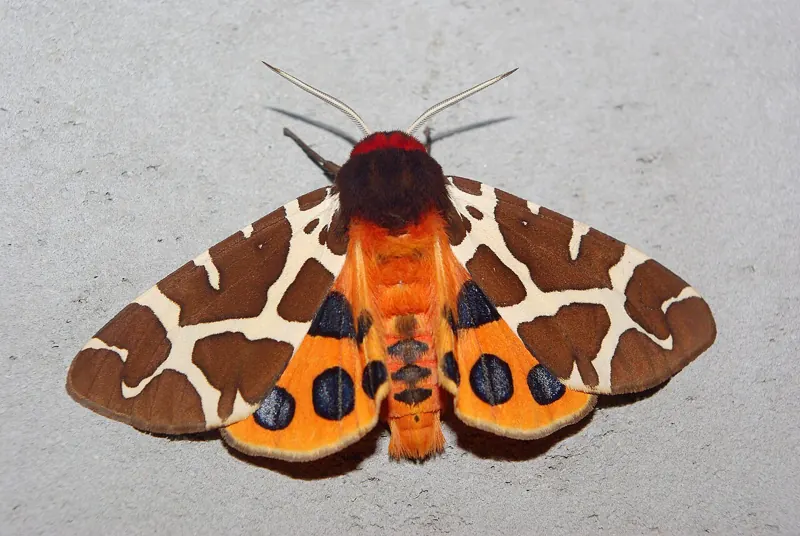
- Garden Tiger caterpillars are hairy ‘woolly bears’. If disturbed, the adult flashes its orange hindwings and can produce a yellow fluid from behind its head. Butterfly Conservation: Garden Tiger
- No two Garden Tigers are exactly alike; even the two wings of one moth can differ. Natural History Museum, London: UK moths, nine of the most colourful and distinctive
No. 21 · Biston betularia
Peppered Moth
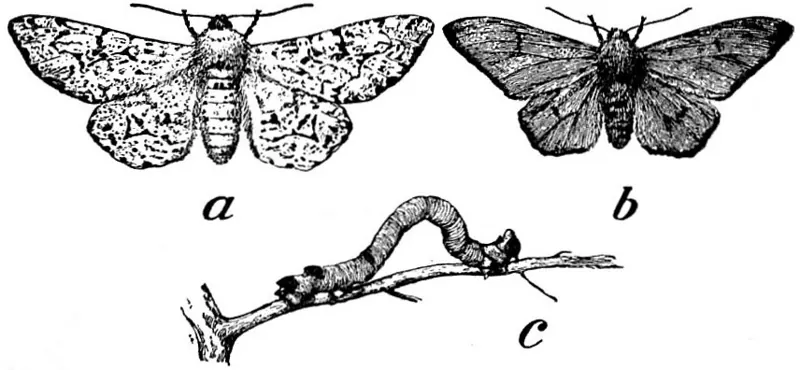
- The Peppered Moth is famous as ‘Darwin’s moth’, one of the best-known examples of evolution by natural selection. Butterfly Conservation: Peppered Moth
- The first black Peppered Moth was recorded in Manchester in 1848. By 1895, 98% of the city’s Peppered Moths were black, because soot had blackened the trees and black moths were better hidden from predators. Butterfly Conservation: Peppered Moth and natural selection
- When air pollution was controlled in the twentieth century and lichens grew back on trees, the pale form became common again. Butterfly Conservation: Peppered Moth and natural selection
- Peppered Moth numbers in Britain fell by almost two thirds between 1968 and 2002, for reasons not yet known. Butterfly Conservation: Peppered Moth and natural selection
No. 22 · Zygaena filipendulae
Six-spot Burnet
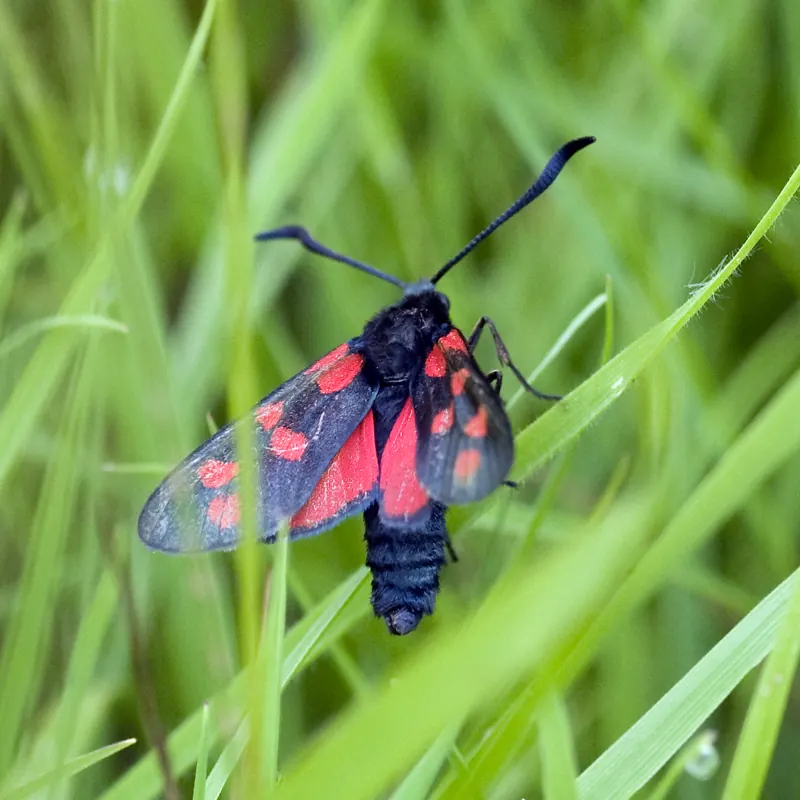
- The Six-spot Burnet is a day-flying moth with six red spots on each forewing, and it flies with a slow, buzzing flight in sunshine. Butterfly Conservation: Six-spot Burnet
- Some moths have clubbed antennae too, such as the day-flying burnets. Butterfly Conservation: Moth myths
- Monarch caterpillars store toxins from the plants they eat. Burnet moths carry hydrogen cyanide in their blood. Britannica: Lepidoptera (natural history, behaviour and ecology)
No. 23 · Tyria jacobaeae
Cinnabar
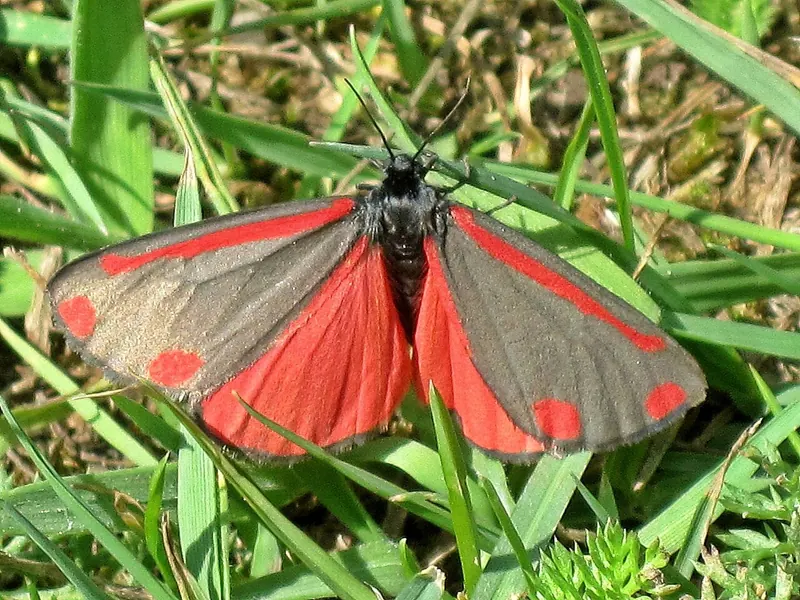
- The Cinnabar moth is named after a red mineral. Its yellow-and-black caterpillars feed on ragwort. Natural History Museum, London: UK moths, nine of the most colourful and distinctive
- Not all moths fly at night: the Cinnabar and Scarlet Tiger fly by day, and some butterflies, such as the Red Admiral, fly at night. Butterfly Conservation: Moth myths
No. 24 · Saturnia pavonia
Emperor Moth
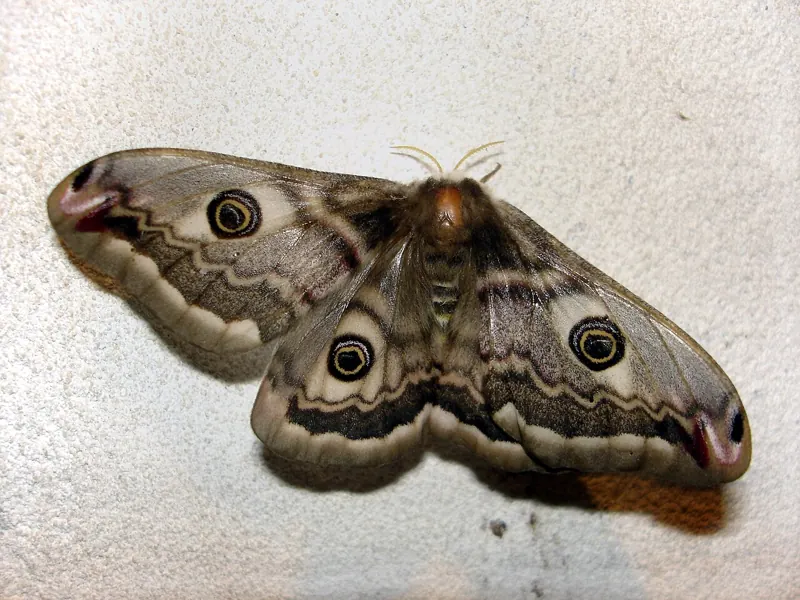
- The Emperor Moth is the only UK member of a family of about 2,000 species. Males fly by day, smelling out females with their feathered antennae. Natural History Museum, London: UK moths, nine of the most colourful and distinctive
No. 25 · Acherontia atropos
Death’s-head Hawk-moth
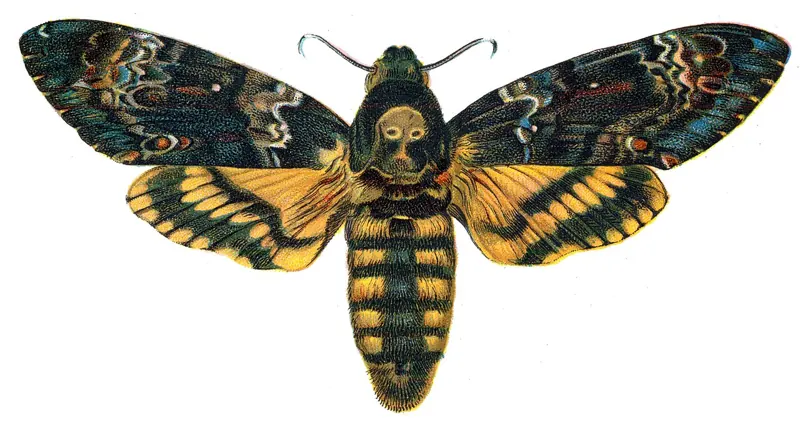
- The Death’s-head Hawk-moth squeaks when alarmed by pushing air through its tongue, and sometimes enters beehives looking for honey. Butterfly Conservation: Death’s-head Hawk-moth
- It is a big moth, with a wingspan of 80–120 mm, and a visitor from abroad: it can’t survive British winters. Butterfly Conservation: Death’s-head Hawk-moth
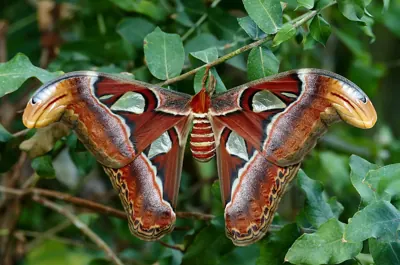
No. 26 · Attacus atlas
Atlas moth
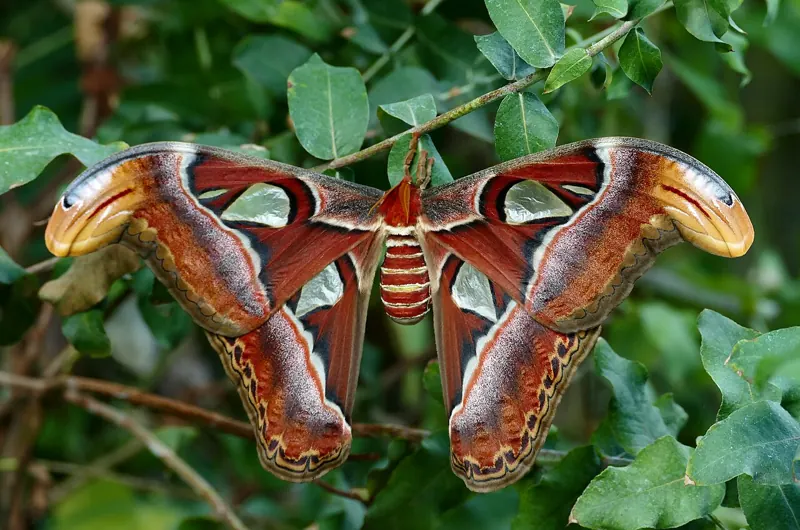
- The atlas moth of South-east Asia is one of the largest moths: females can have a 25 cm wingspan. Its wingtips look like a snake’s head. Britannica: Atlas moth
- Adult atlas moths cannot feed: their mouthparts are tiny and useless. Britannica: Atlas moth
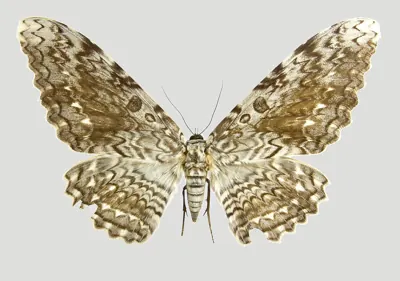
No. 27 · Thysania agrippina
White witch
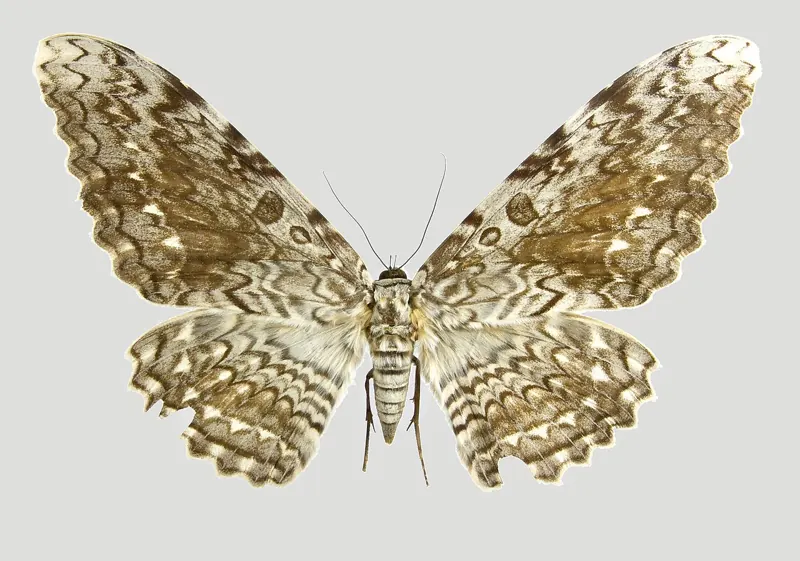
- The white witch moth of the Americas is considered to have the largest wingspan of any moth, reaching 28 cm or more. Britannica: Atlas moth
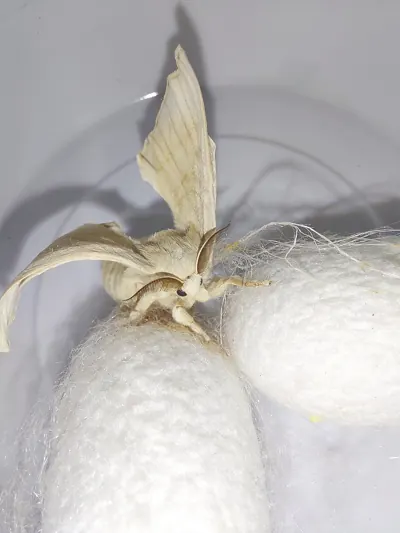
No. 28 · Bombyx mori
Silk moth
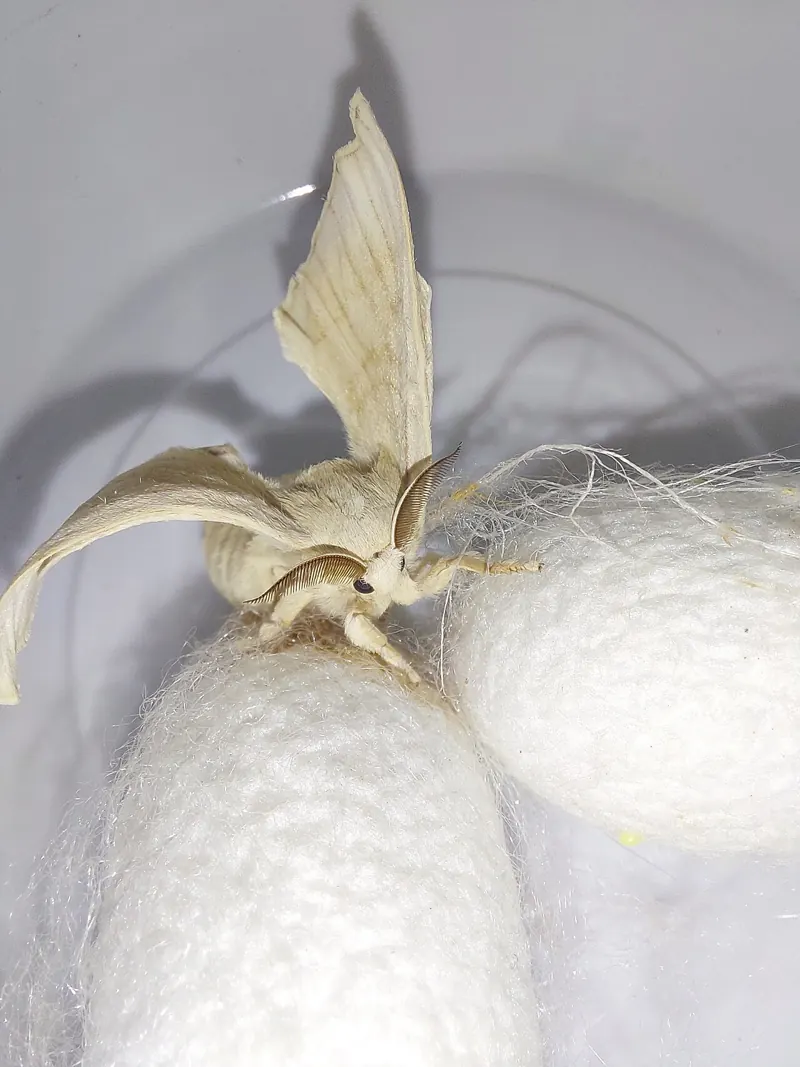
- Nearly all silk comes from the domesticated silkworm, a moth caterpillar originally from China. Britannica: Lepidoptera
- The silkworm moth has been domesticated so completely that it is no longer found in the wild. The adults cannot fly and do not eat. Britannica: Silkworm moth
- A silkworm cocoon is one continuous strand of silk averaging about 915 metres (1,000 yards) long. Britannica: Silkworm moth